
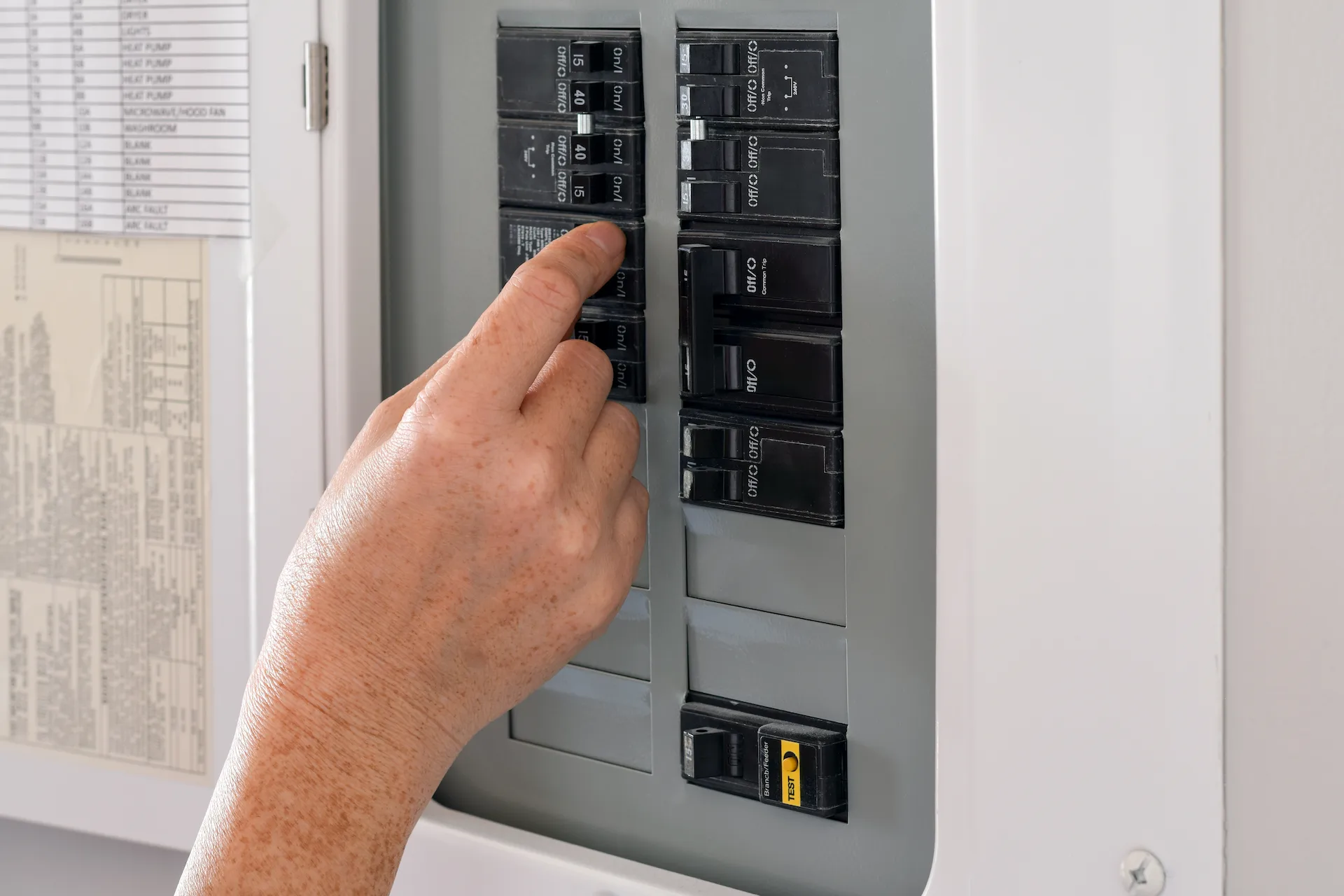
A tripped breaker is one of the most common electrical calls Doug’s Service Company gets across Houma, Thibodaux, and the surrounding parishes, and most of the time it’s a simple fix. Flip it back, plug in your toaster, and move on. But when the same breaker keeps tripping, or several breakers start acting up at once, that pattern is telling you something. Knowing the difference between a one-time nuisance trip and a real electrical problem can save you a fire hazard, not just an inconvenience.
Here’s how to read the signs, and when it’s time to call for electrical troubleshooting instead of just flipping the switch again.
Why Breakers Trip in the First Place
A breaker’s whole job is to protect your home. When current flow exceeds what a circuit can safely handle, the breaker trips and cuts power before wires overheat. That’s a safety feature working correctly, not a malfunction. The question isn’t whether your breaker tripped. It’s why.
Most trips fall into one of three categories: overloaded circuits, short circuits, or ground faults. Each one behaves a little differently, and each one tells you something different about what’s going on behind your walls.
Overloaded Circuit
This is the harmless version. You’ve got too many devices pulling power from one circuit, usually a space heater, a window AC unit, and a few other appliances all plugged into the same room. The breaker trips to prevent overheating. Unplug something, reset the breaker, and you’re back in business.
Short Circuit
A short circuit happens when a hot wire touches a neutral wire, often due to damaged insulation or a wiring fault. This trips the breaker fast and hard, and it can happen repeatedly even with nothing plugged in. Short circuits are a genuine electrical problem, not a usage issue.
Ground Fault
Similar to a short, but the hot wire is contacting a ground wire or a grounded surface instead. Ground faults often show up in kitchens, bathrooms, or garages, areas with moisture or metal surfaces nearby. GFCI outlets are designed to catch these before they become dangerous, but a tripping breaker on a non-GFCI circuit is worth investigating.
Signs It’s Nothing to Worry About
If your breaker trip fits this description, you’re likely dealing with normal, expected behavior from a safety device doing its job.
Probably no problem if:
- The trip happened once, right after plugging in a high-draw appliance
- Resetting the breaker fixed it, and it hasn’t happened again
- You can identify exactly what caused the overload
- Only one circuit is affected, and it’s not a recurring pattern
Signs You’re Dealing With a Real Electrical Problem
Any of these on their own is worth a professional look. A burning smell or a hot panel isn’t a wait-and-see situation.
It’s a call-today situation if:
- The same breaker trips repeatedly, even with fewer devices plugged in
- You smell a burning odor near the panel or an outlet
- The breaker feels hot to the touch, or the panel itself feels warm
- Lights flicker or dim when other appliances turn on
- You hear buzzing or crackling from an outlet or the panel
- Multiple breakers trip around the same time without an obvious cause
What a Repeatedly Tripping Breaker Could Mean
If one specific breaker keeps tripping regardless of what’s plugged in, the problem usually lives in one of three places: the wiring feeding that circuit, the outlet or fixture on that circuit, or the breaker itself has worn out and needs replacing. None of these are DIY territory. Opening a panel without training risks a shock, and misdiagnosing a wiring fault can mean the real problem keeps smoldering behind a wall long after you’ve stopped noticing the trips.
This is also where an aging electrical panel comes into the conversation. Older homes across Southern Louisiana were often built with panels sized for a fraction of the electrical load modern households actually use. Air conditioning, kitchen appliances, home electronics, and EV chargers all draw more than the original panel was designed to handle. Frequent trips across multiple circuits can be a sign the panel itself needs an upgrade, not just a wiring fix.
Should You Just Replace the Breaker Yourself?
Swapping a single breaker sounds simple, and hardware stores sell them off the shelf, which makes it tempting. But a breaker that keeps tripping is a symptom, not the disease. Replacing it without diagnosing why it’s tripping just delays the real problem, and working inside a live panel without proper training is one of the more dangerous DIY mistakes a homeowner can make. Doug’s technicians are trained to trace the actual cause, whether that’s in the breaker box, the wiring, or a specific outlet, and fix it at the source.
What to Do Right Now If a Breaker Won’t Stop Tripping
Unplug everything on the affected circuit and try resetting the breaker one more time. If it holds with nothing plugged in, the problem is likely a specific device or appliance. If it trips immediately with nothing plugged in, stop resetting it and call a professional. Repeatedly forcing a breaker to reset when it won’t hold is how house fires start.
Doug’s has been serving Houma, Thibodaux, St. James, St. Mary Parish, Ascension Parish, Lafourche Parish, Assumption Parish, Terrebonne Parish, New Orleans, Raceland, and Lockport since 1988, and our electricians work under Doug’s Electrical and Mechanical License #CL73874. We diagnose the actual cause before we touch anything, so you’re not paying to fix the wrong problem.
Frequently Asked Questions
Is it normal for a breaker to trip occasionally?
Yes, an occasional trip tied to a specific overload, like running a space heater and a hair dryer on the same circuit, is normal and expected. It’s the breaker doing exactly what it’s designed to do.
How many times can a breaker trip before it’s a problem?
There’s no strict number, but if the same breaker trips more than once or twice in a short period without an obvious cause, it’s worth having an electrician take a look rather than continuing to reset it.
Can a tripping breaker actually start a fire?
A breaker that’s functioning correctly prevents fires by cutting power before wires overheat. The risk comes from repeatedly forcing a reset on a breaker that won’t hold, or ignoring a short circuit or ground fault that keeps recurring.
Why does only one room in my house have this problem?
Homes are wired into separate circuits by room or appliance group. If one circuit consistently trips while others don’t, the issue is usually isolated to that specific circuit’s wiring, outlets, or the devices connected to it.
Do I need a whole new electrical panel, or just a repair?
It depends on the cause. A single faulty circuit usually doesn’t require a panel replacement. But if your panel is older, undersized for your home’s current electrical load, or trips across multiple circuits, an upgrade may be the more reliable long-term fix. Our electricians will tell you honestly which situation you’re in.
Is it safe to keep using outlets on a circuit that recently tripped?
If the breaker reset and held, and you’ve identified the cause, normal use is fine. If it trips again without a clear explanation, avoid using that circuit until it’s been inspected.
Get a Straight Answer on Your Breaker Problem
If your breaker keeps tripping and you’re not sure why, don’t keep guessing. Call Doug’s at (985) 746-1116 or request an appointment online, and our licensed electricians will find the actual cause and fix it right.

